My Experience as a Death Doula
A Note About Privacy
Before sharing this experience, I want to acknowledge that my client permitted me to write about our journey to Switzerland for Voluntary Assisted Dying for educational and advocacy purposes, with the understanding that their personal information would remain private. In honoring their wishes, I've intentionally left out identifying details and focused on my experience as a death doula, the support I provided, and what I learned along the way.

A sunny pedestrian street in Liestal, Switzerland, with Swiss flags, historic buildings, and outdoor cafés, photographed during a death doula's journey accompanying a client for Voluntary Assisted Dying through Pegasos.
What does it take to travel from the United States to Switzerland for Voluntary Assisted Dying? And what does a death doula actually do when accompanying someone who has chosen to end their life?
I recently had the opportunity to accompany a client to Switzerland for Voluntary Assisted Dying (VAD) through Pegasos, a Swiss organization that assists people who have made an informed decision to end their lives.
It was an experience that involved months of preparation, international travel, physical caregiving, emotional support, and navigating an unfamiliar process in another country.
It was also one of the most beautiful deaths I have witnessed.
I know that might sound strange to some people. We don't often associate death with happiness, relief, or joy. But those were very much part of this experience.
I'm sharing my experience because I believe we need more open conversations about death, dying, and the choices available to people at the end of life. I also want to help others understand what traveling to Switzerland for assisted dying can involve, particularly when someone is already dealing with significant health challenges.
To protect my client's privacy, I've left out identifying information and certain personal details. What I'm sharing is primarily my experience as the death doula who accompanied them.
Why Would Someone Travel to Switzerland for Assisted Dying?
In the United States, Medical Aid in Dying (MAID), sometimes called Death with Dignity, is available in certain states to people who meet specific legal and medical requirements.
Generally, these laws require a terminal diagnosis with a prognosis of six months or less, decision-making capacity, and the ability to self-administer the medication. Other requirements vary by state.
But what happens when someone is experiencing significant suffering and declining quality of life without meeting those requirements?
For some people, Switzerland becomes an option worth exploring.
Switzerland has a different legal framework for assisted suicide (which is the term they use but is discouraged in the US), which is often described by organizations and individuals as Voluntary Assisted Dying.
Swiss law requires that the person make the final act themselves, have decision-making capacity, and receive assistance that is not motivated by selfish interests. Medical and organizational assessments impose additional requirements.
Organizations such as Pegasos work with people seeking this option, including individuals traveling from outside Switzerland.
That doesn't mean everyone who applies will be accepted. There are medical evaluations, documentation requirements, and important questions about capacity, voluntariness, and the person's circumstances.
For my client, traveling to Switzerland was not a spontaneous decision.
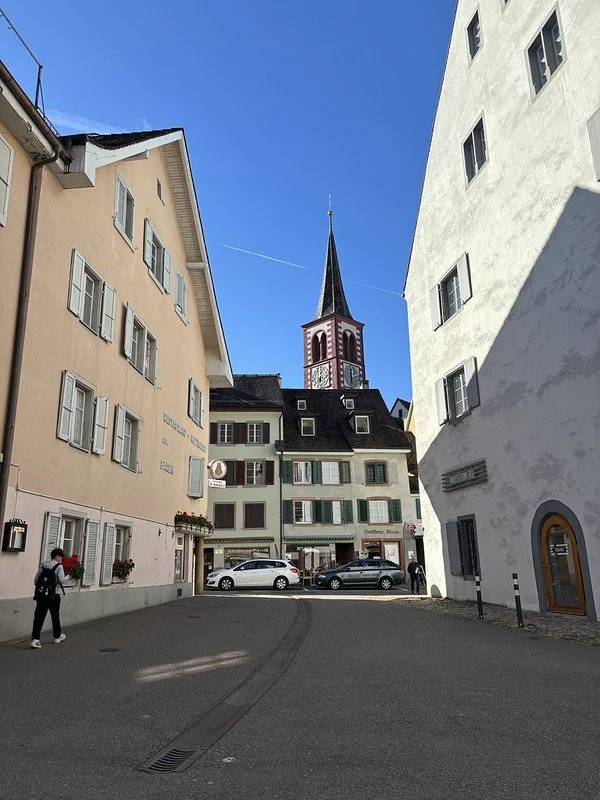
Exploring the quiet streets of Liestal, Switzerland, surrounded by historic buildings and a beautiful church steeple rising above the town.
It was something they had considered carefully.
During the time I knew them, we had many conversations about their declining health, their quality of life, and what mattered most to them.
They were very clear about their wishes.
One of the things this experience reinforced for me was how difficult it can be for people in the United States who want to explore assisted dying but don't qualify under their state's laws. Traveling internationally adds financial, physical, and logistical challenges at a time when someone may already be dealing with declining health. It raises important questions about access, autonomy, and the choices available to people at the end of life.
Their frustration was not simply about wanting to die. It was about wanting more control over what happened to them as their health continued to decline.
And that distinction matters.
What Is the Role of a Death Doula in Voluntary Assisted Dying?
As a death doula, my role is not to tell someone whether they should or shouldn't choose assisted dying.
My role is to listen, provide information, help them explore their options, and support them in making decisions that reflect their own values and wishes.
I believe people deserve compassionate, nonjudgmental support when they are facing difficult end-of-life decisions.
That includes people who want every possible life-prolonging treatment, people who choose comfort-focused care, people considering voluntarily stopping eating and drinking (VSED), and people exploring Medical Aid in Dying or Voluntary Assisted Dying.
Supporting someone's autonomy doesn't mean making the decision for them.
For this particular client, our conversations initially focused on Voluntarily Stopping Eating and Drinking (VSED) as an end-of-life option.
As we explored what VSED would involve, including the preparation, caregiving needs, and challenges of finding appropriate professional support, our conversations began to shift.
Voluntary Assisted Dying in Switzerland, through Pegasos, became another option to consider.
This wasn't a decision made overnight. It developed through ongoing conversations, gathering information, and exploring what was realistically possible.
My role throughout that process wasn't to steer my client toward one choice or another. It was to provide information, listen to their concerns, help them explore their options, and support them in making a decision that reflected their own wishes and values.
Once my client decided to pursue Voluntary Assisted Dying in Switzerland, my work expanded to include preparing for international travel, coordinating practical details, providing physical and emotional support, accompanying them throughout the journey, and being present during their death.
What began as conversations about VSED eventually became an experience that took us to Switzerland.
And throughout it all, my role remained the same: to provide compassionate, nonjudgmental support while respecting my client's autonomy.
It was a deeply personal experience, and one that involved much more than simply accompanying someone through their death.
When you travel with someone who needs assistance with everyday activities, you become involved in parts of their life that are often very private.
Helping someone move safely, get dressed, use the bathroom, or manage their belongings requires trust.
These aren't always the parts of death doula work people imagine, but they are important.
Dignity isn't about never needing help.
Sometimes dignity is having someone who can help you without making you feel embarrassed, rushed, or like a burden.
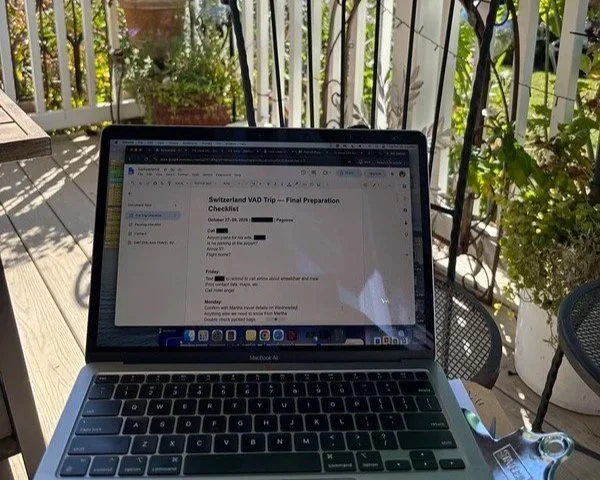
A laptop displaying a Switzerland Voluntary Assisted Dying travel preparation checklist on a sunny garden porch, highlighting the detailed planning and coordination involved in accompanying a client to Pegasos in Switzerland.
Planning a Trip to Switzerland for Voluntary Assisted Dying
One of the biggest lessons from this experience was just how much planning is involved.
Traveling internationally is complicated enough when you're healthy. Traveling with someone whose physical abilities are declining adds another level of responsibility.
We had to think about flights, wheelchair assistance, transportation, hotel accommodations, medications, documentation, dietary restrictions, and what would happen to personal belongings afterward.
We also had to think about timing.
My client's physical condition was changing, and we needed to consider whether they would still be able to travel safely.
This is something people may not fully appreciate when researching assisted dying in Switzerland.
Even after an organization has accepted someone, getting there can be a significant challenge.
The person must still be able to travel, participate in the required assessments, and meet the organization's requirements when the time comes.
An unexpected illness, injury, or hospitalization could change everything.
We made arrangements for wheelchair assistance at the airports and selected airline seats with additional legroom.
We also arranged private transportation from the airport to our hotel.
I'm so glad we did.
After an overnight international flight, the last thing I wanted was to figure out unfamiliar public transportation while managing luggage and helping someone with limited mobility.
We also reserved our hotel room so it would be available when we arrived in the morning rather than having to wait for the usual afternoon check-in.
These details might seem small, but they made an enormous difference.
Traveling to Switzerland With Someone Who Needs Physical Assistance
The journey itself went relatively smoothly, largely because of the planning we had done.
At the airport, wheelchair attendants helped us navigate security and get to the gate.
On the plane, the extra legroom was incredibly helpful. My client needed assistance getting up, walking to the bathroom, and returning to their seat. Having enough room to move made that process much easier.
I didn't really sleep during the flight. I rested when I could, but I wanted to be available whenever my client needed help. And they did need help, but that was exactly why I was there.
When we arrived in Switzerland, wheelchair assistance helped us navigate the airport, including passport control.
We were asked about the purpose of our visit, and we explained that we were there for assisted dying through Pegasos. In our experience, the conversation was brief and straightforward.
Our prearranged driver met us at the airport and took us to our hotel. The wheelchair assistant was incredibly helpful, even making the call to our driver for us since we didn't speak Swiss German.
We had made it through one of the biggest challenges of the trip, and the part my client had been most worried about. Their declining health made international travel especially difficult, and there had been a lot of concern about whether they would be able to manage the journey.
I could already see how much energy the trip had taken out of my client. But I also knew that my role was to do everything I reasonably could to help them get to Pegasos safely, even if that meant putting my own comfort and needs aside for a little while.
My job for a few days was going to be 24/7 assistance.

The outdoor terrace at Hotel Engel in Liestal, Switzerland, where we stayed during our trip for my client's voluntary assisted death.
The Ordinary Challenges of Being in an Unfamiliar Country
Once we arrived at the hotel, we still had plenty of ordinary things to figure out.
We needed food, water, and a few supplies to keep everyone comfortable.
I discovered that English wasn't spoken as widely in the town as I had expected. I don't speak Swiss German, so there were moments when communicating took a little creativity.
My Visa debit card also decided not to cooperate. I had looked up if credit cards work and Visa is widely accepted, but I did not anticipate that a Visa Debit would not work as a credit card the same way.
Thankfully, we had access to local currency, so anything we needed to purchase was no problem. Even when no one at the stores spoke English, numbers were still the same, so I could calculate if I had enough Swiss francs for the food I was purchasing.
Finding food was another challenge. My client had dietary restrictions and specific preferences, and I quickly realized I should have researched more options before traveling.
There were meals we thought would work that didn't. There were restaurants where communication was difficult. And once we got to the hotel, my client was simply too exhausted to go out, so I had to make some choices around food options as best as I could.
At one point, we hoped to explore the town together using a wheelchair, but after everything involved in getting there, even that felt like too much. So we changed the plan.
That's an important part of supporting someone who is seriously ill.
You can prepare as thoroughly as possible, but you still have to be flexible.
Sometimes the most compassionate thing you can do is recognize that the person needs to rest and adjust your expectations. We had both hoped they would be able to enjoy the town a little on their last day, but it didn't work out, and that was okay.
Meeting With the Doctor and Pegasos Before the Assisted Death
The day before the planned death, my client had a video call with a doctor.
The doctor asked about the journey, how my client was doing, and whether they remained certain about their decision.
My client was clear that they wanted to proceed.
Later, a representative from Pegasos came to our hotel to meet with us.
I had already been impressed by the communication leading up to the trip. We received detailed information, checklists, and answers to questions. We knew whom to contact if something came up. Having that support made a tremendous difference.
During the hotel meeting, we reviewed what would happen the following day, discussed the necessary paperwork, and went over the process.
We were told there would be time for conversation, music, private moments, or whatever my client wanted before proceeding. There would be no rush.
We also learned that Pegasos would pick us up at the hotel and provide transportation back afterward. I appreciated that more than I can explain; not speaking the language and being in a different country made transportation the one part I was nervous about.
As a death doula, I'm usually the person thinking ahead and trying to make sure everything is taken care of. Knowing that I didn't need to worry about transportation on the day of the death allowed me to focus on being present.
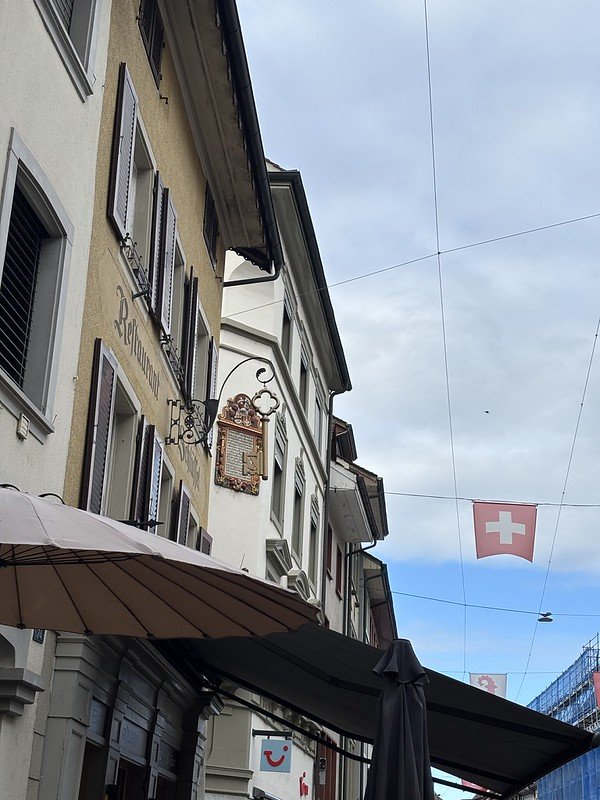
Walking through the historic streets of Liestal, Switzerland, with traditional Swiss buildings, charming storefronts, and Swiss flags hanging overhead.
The Night Before a Planned Death
One of the things I found most interesting about the evening before my client's death was how ordinary so much of it was.
We needed to find dinner.
There were belongings to organize. Some things would be donated, others discarded, and a few things needed to go home.
My client was very concerned about making sure everything was handled correctly. I repeatedly offered to take care of it afterward, but they wanted to take care of it themselves.
I remember thinking that if I knew I was going to die the next day, I probably wouldn't be worrying about organizing my belongings. But that's me, and this wasn't about me.
People don't suddenly stop being themselves because they know death is approaching.
They still have preferences, routines, and things they want done a certain way. And sometimes maintaining control over those little things matters.
So we went through their belongings together, sorting them into piles of what would be brought with us to Pegasos to be donated, what I would bag up for trash the next evening when I got back to the room, and what had to be brought back to the States.
There was also the reality of how physically vulnerable my client had become. Even simple activities carried risks.
My client was concerned that an accident or medical emergency could prevent the planned death from happening. And that concern was understandable.
After all the work involved in getting to Switzerland, something as ordinary as a fall could have meant hospitalization and losing the opportunity to proceed.
I want to make an important distinction here.
My client was not afraid of dying.
They were concerned that something might happen to prevent them from having the death they had chosen.
Those are two very different things.
The Final Morning
The morning of my client's death was surprisingly ordinary.
We got up, got dressed, gathered our belongings, and went downstairs for breakfast. The hotel had a lovely breakfast, and my client ate well which was nice to see how much joy they had in their last meal.
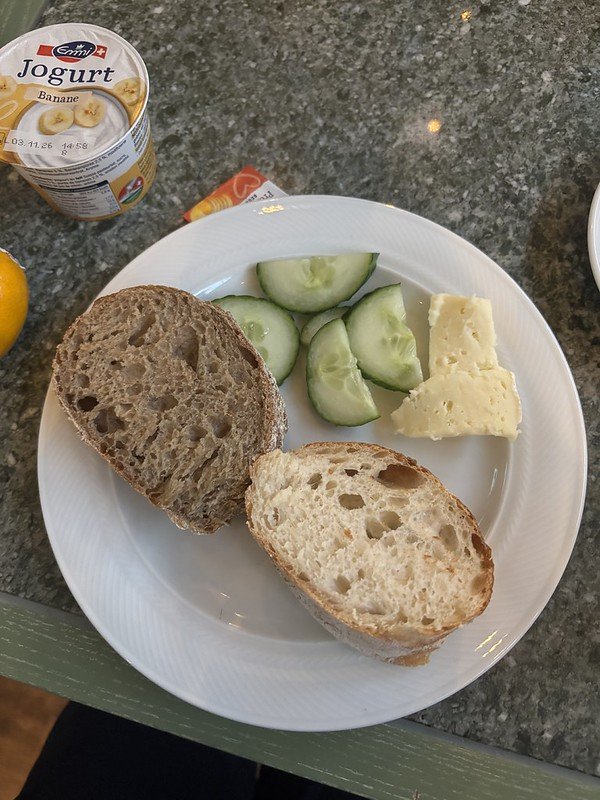
Breakfast on the morning of my client's voluntary assisted death in Switzerland. Give me good bread and quality cheese, and I'm happy. That's the chef in me!
I remember looking around at the other guests going about their morning.
People were getting coffee, talking, and making plans for their day. Some had their luggage with them because they were checking out to head home that day.
And we were sitting there knowing that this would be my client's last morning.
After breakfast, we returned to the room, gathered everything we needed, and met our contact from Pegasos. We didn't have to navigate an unfamiliar route or arrange transportation. We just needed to be ready. And we were.
What Was Pegasos Like?
People searching for information about Pegasos in Switzerland may wonder what the actual facility is like. I can only describe the location I visited and my personal experience.
The building was in an area that felt more commercial than residential, but inside, the space was welcoming.
There was a large room filled with natural light, beautiful large plants, comfortable furniture, and refreshments.
The staff were warm, patient, and kind. The nurse even brought her dog, after checking with us first to make sure we were comfortable with that. It was such a simple gesture, but it added to the welcoming, relaxed atmosphere.
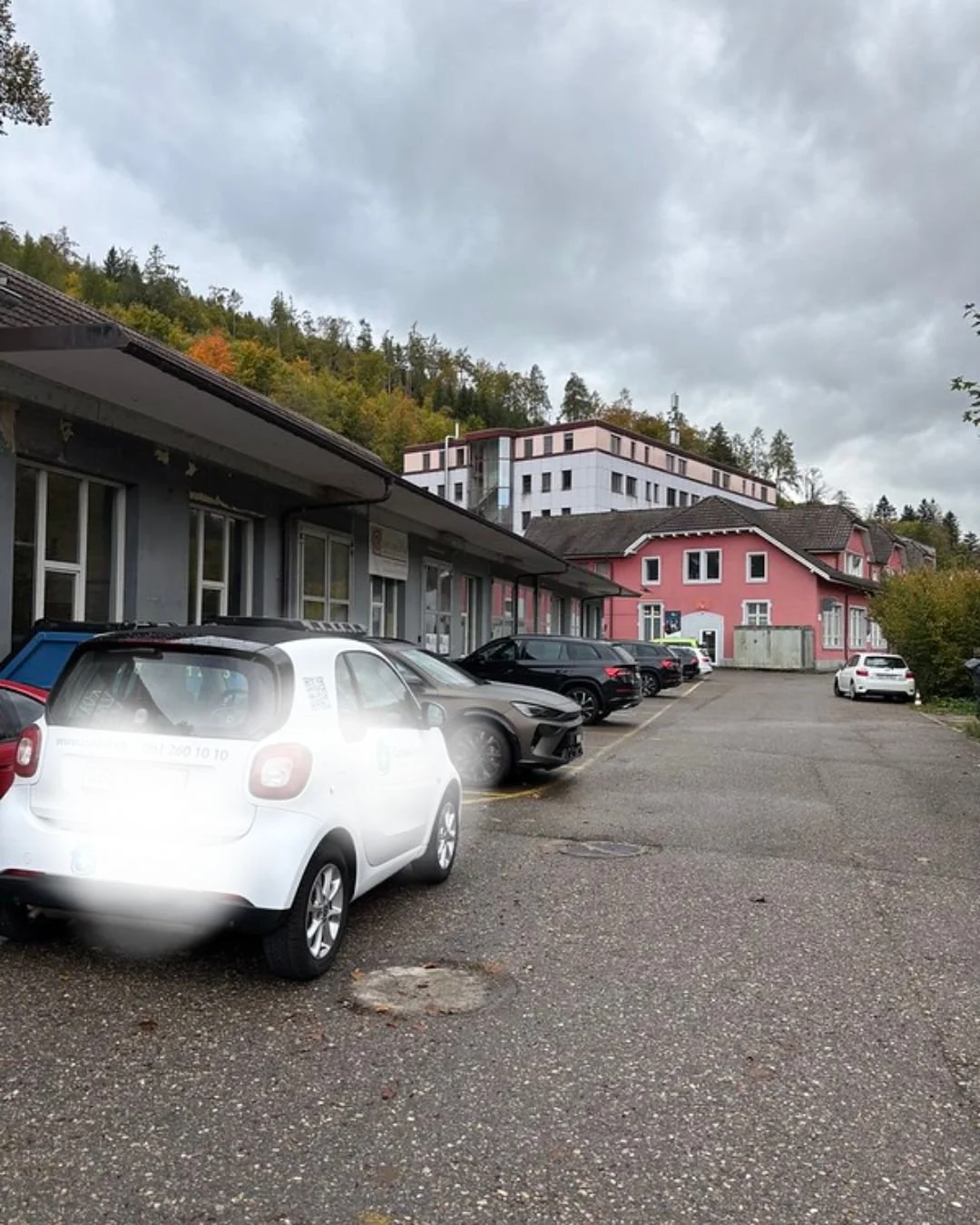
The exterior of the Pegasos facility I visited in Switzerland while accompanying my client through voluntary assisted death (VAD). Although the surrounding area felt commercial, the space inside was warm, peaceful, and welcoming.
It didn't feel rushed or impersonal.
We began with paperwork. My client reviewed and signed documents, and I completed the information required of me as a witness. There was a great deal of attention given to documenting the decision and confirming my client's wishes.
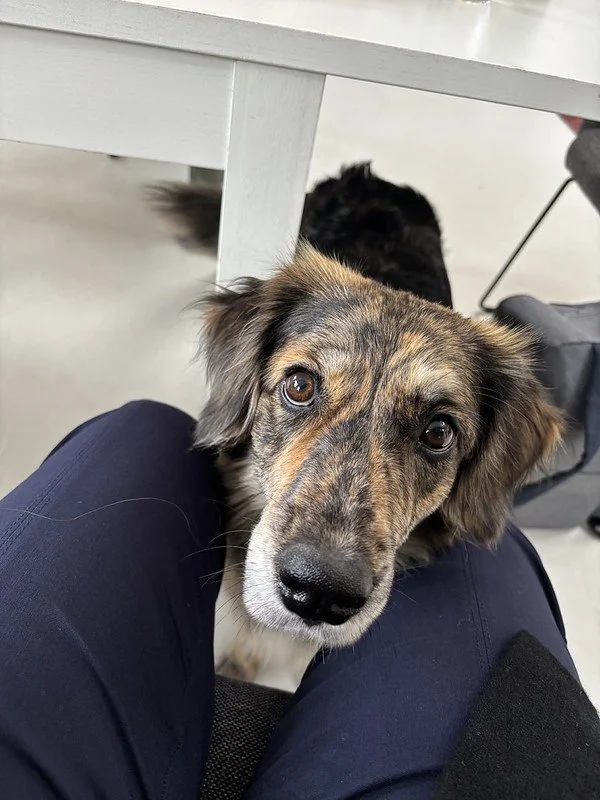
The nurse's sweet dog at Pegasos in Switzerland was happy to leave us alone until I asked if I could share a little piece of my croissant. Then I suddenly had a new friend!
The medical professional then prepared the intravenous line.
In the process I witnessed, my client was responsible for activating the mechanism that would allow the medication to begin flowing.
One of the concerns leading up to the trip had been whether my client would physically be able to do this. The staff at Pegasos reassured us that they had worked with people with a wide range of physical abilities and had developed creative ways to accommodate different needs. They even shared an example of assisting someone who had no arms.
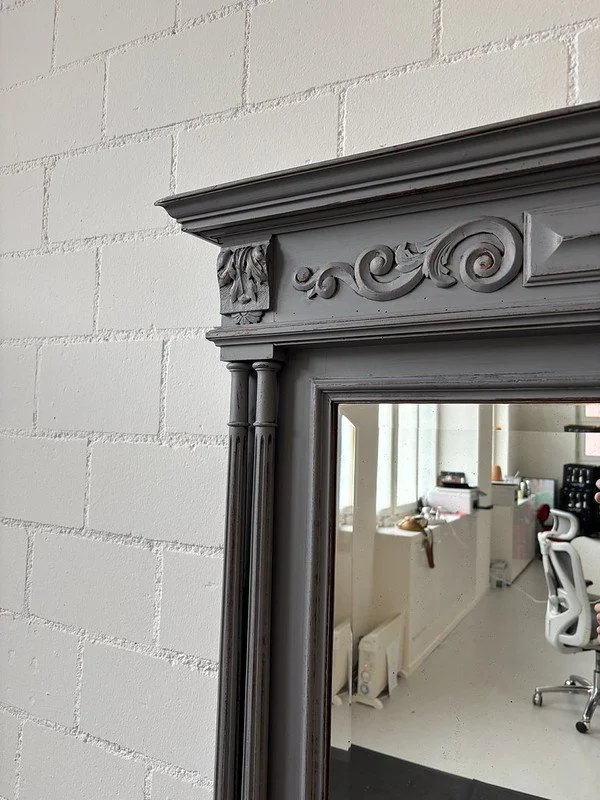
Being present for someone at the end of life makes me more aware of the little things. Even the beautiful carved details on this mirror caught my attention. It's a reminder of how much there is to notice when we slow down and really look.
That reassurance was incredibly important, especially given the physical challenges my client was experiencing.
In Swiss assisted suicide, the person must perform the final act themselves. While assistance can be provided to accommodate physical limitations, the decision and final action must remain with the person choosing to die.
But what stood out to me most wasn't the paperwork or medical procedure, it was the way my client was treated.
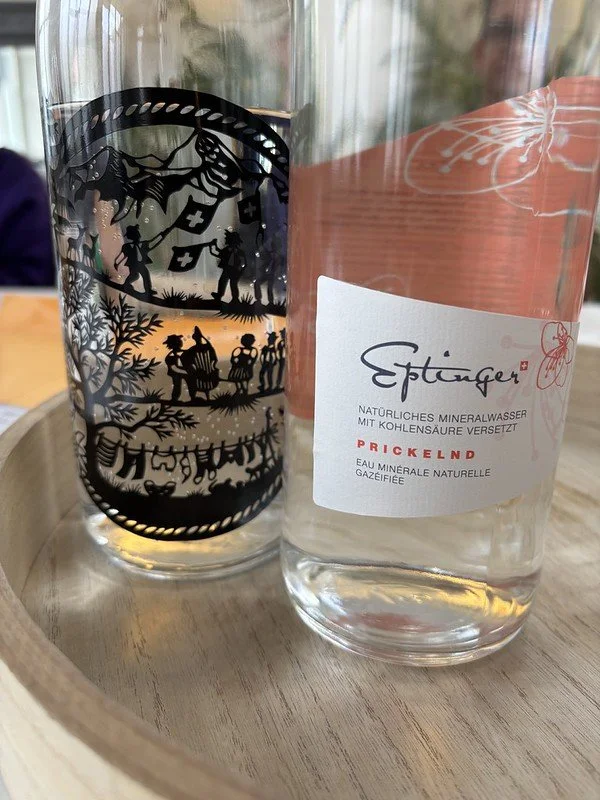
I saw this brand of sparkling water everywhere in Switzerland and loved the traditional artwork on the other bottle. Our assistant at Pegasos explained that this style of design is commonly found in Swiss culture. Another little detail that caught my attention during our visit.
There was time to talk.
There was time to listen to music.
There was time for private conversation with someone close to them.
And there was no pressure to hurry.
I stepped away for a while to give my client that privacy, but I also had the opportunity to spend a few minutes alone with them myself.
Even though I was there in a professional role, we had formed a genuine human connection. I wasn't just accompanying someone through a process. I was saying goodbye to someone I had come to know and care about.
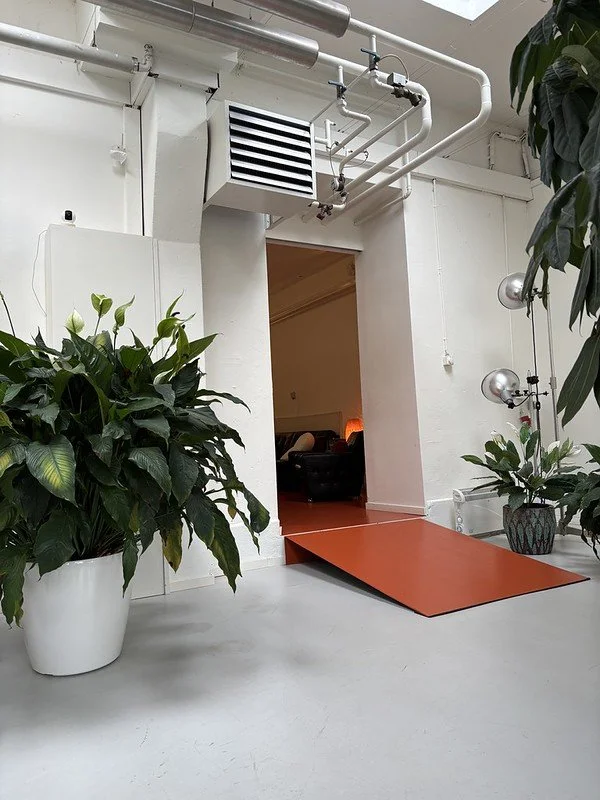
The entrance to the room where voluntary assisted death (VAD) takes place at Pegasos in Switzerland. The large plants, natural light, and welcoming atmosphere helped make the space feel peaceful rather than clinical.
The Happiest and Most Peaceful I Had Ever Seen My Client
By the time we made it to Switzerland and the day of VAD, I had known my client for many months.
During that time, I had witnessed the challenges they were experiencing as their health and independence declined.
But once we arrived at Pegasos and my client was safely settled in the bed, something changed. The concern that something might prevent the planned death was finally gone. Everything was in place.
And I saw a level of happiness and peace that I had never seen in this person before. There was no fear. My client was full of joy and gratitude.
They expressed love and thanked the people who had helped make the experience possible.
They were genuinely happy.
I know that may be difficult for some people to understand. We tend to associate death with sadness, fear, and loss. And those feelings are certainly part of many deaths, but they aren't the only feelings that can be present.
For my client, this was the death they wanted.
They had worked incredibly hard to get there, and they were grateful that it was finally happening.
When they were ready, they initiated the process, expressing their love for their family out loud one last time. They lost consciousness quickly, and death followed within minutes.
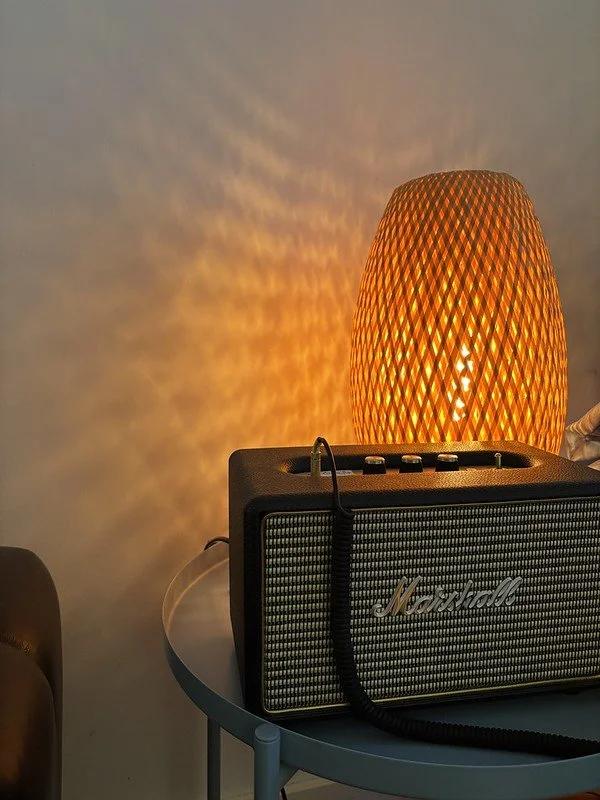
Another little detail that caught my attention at Pegasos in Switzerland. The warm glow of a lamp beside a Marshall speaker created a cozy atmosphere. Being present for someone's death has a way of making me notice and appreciate the smallest things.
I couldn't help but think, who could imagine a better death than that? To have your final words be filled with joy, happiness, and love. To be completely at peace with your decision, surrounded by people who care about you, and to die on your own terms.
I know that everyone's idea of a good death is different, but for my client, this was exactly what they wanted.
I cried because I was so happy that my client had been able to have the death they wanted. And I cried because I was sad that this person I had come to know and care about was no longer here.
I love this about life. That two seemingly opposite things can be true at the same time. I could feel joy and sadness together, without one taking away from the other.
I don't think we need to assign one emotion to dying. Death can be sad and beautiful. There can be grief and relief, loss and gratitude, sometimes all at once.
There was beauty in this moment, even in the sadness. And I felt honored and grateful to have been part of it.
It was peaceful.
It was beautiful.
After it was done, I stepped away to use the restroom and had been thinking to myself, what a gift this life is and what a gift to be able to help support someone get the death they want.
This moment is something I will never forget.
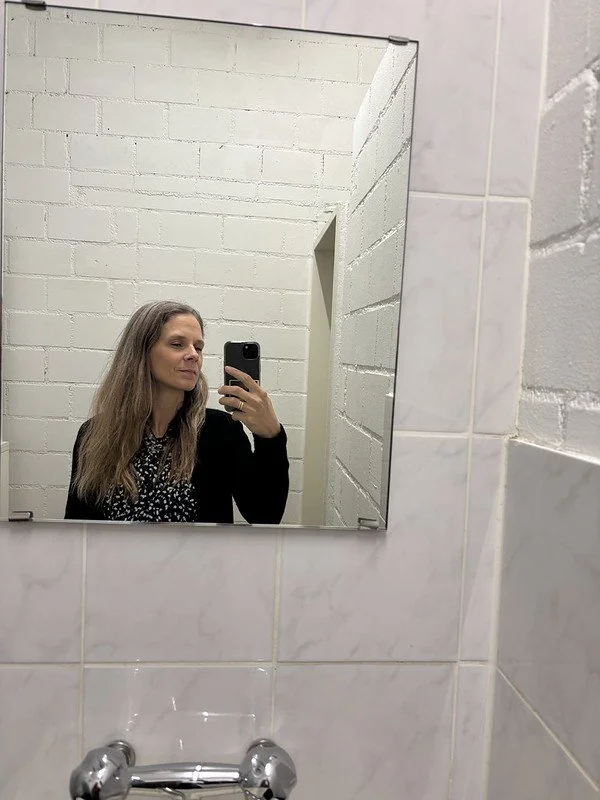
A quiet moment of reflection after supporting my client through their voluntary assisted death in Switzerland. I felt sadness, gratitude, and a deep appreciation for life, all at once.
What Happens After Voluntary Assisted Dying in Switzerland?
After my client's death, there were still official procedures to complete.
The authorities were notified, and police and a medical examiner came to the facility.
As a witness, I also had paperwork to complete.
While we waited for them to arrive, I spent time walking outdoors with someone who had accompanied my client. We talked about life, memories, and the experience we had just shared. It was a peaceful time.
While they were there, we waited in the other room for the police and medical examiner to do their jobs. It did not take very long and once it was complete, we were able to leave.
When the official procedures were finished, Pegasos arranged our transportation back to the hotel. Once again, I was grateful for the practical support.
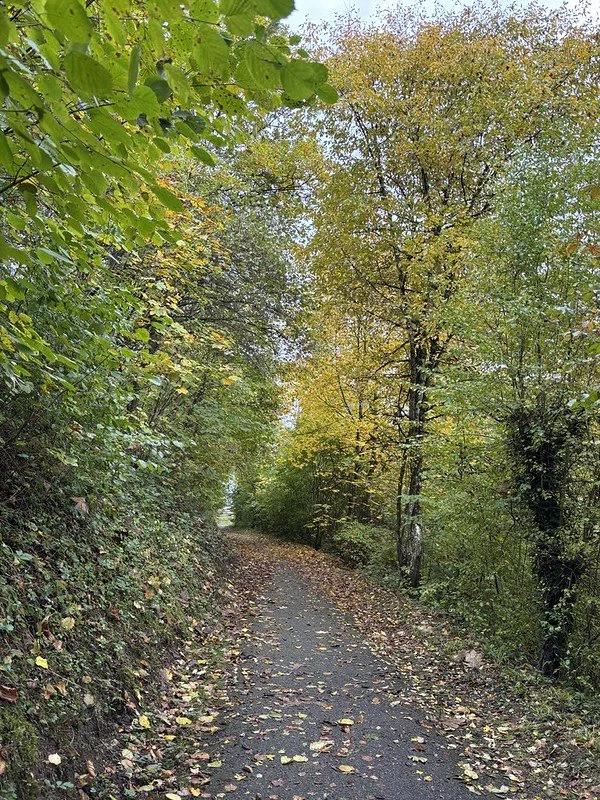
A peaceful wooded path in Switzerland where we took a walk after my client's voluntary assisted death (VAD), offering a quiet moment to reflect on the experience.
Back at the hotel, I still had belongings to sort through and things to take care of.
I remember walking into the room and noticing how strange it felt without my client there.
For the previous days, I had been constantly aware of their needs.
Listening for movement.
Helping with everyday activities.
Making sure they were comfortable.
And suddenly, that part of my work was over.
There were still responsibilities, but the person I had been caring for was gone.
That transition was something I hadn't fully anticipated.
Why Do People Think Accompanying Someone Through Assisted Dying Is Brave?
Throughout the trip, several people told me they thought I was brave, including the police officer who came to Pegasos after my client's death. The officer shared this with the nurse, who translated it for me.
And I found that interesting, because I didn't feel brave.
I felt like I was helping someone have control over their own life and death.
I felt calm, confident, and comfortable with what I was doing.
There was a tremendous amount of work involved in helping my client get to Switzerland, and there were certainly challenges along the way. But being present for their death didn't feel like something that required courage.
Death happens.
Every one of us will die, and many of us will be present when someone we care about dies.
For me, accompanying someone through Voluntary Assisted Dying was an extension of the work I already do as a death doula.
My role wasn't to decide whether my client should die. It was to support someone who had made an informed decision about their own life and death.
I wonder whether people describe this work as brave because we're so uncomfortable with death.
Maybe being willing to talk openly about it, sit with it, and witness it without looking away seems unusual. But I wish it weren't. I wish we were more comfortable supporting people who are dying, even when their choices are different from what we might make for ourselves.
What This Experience Taught Me About Living
After my client's death, I returned to the hotel to finish the work we had started the night before. There were belongings to sort through, trash to bag up, and electronic devices to organize so they could be returned to my client's loved ones. I wanted to make sure everything was taken care of, and that nothing was left behind for the hotel staff to deal with.
Once that was finished, I had some time to walk around the town where we were staying.
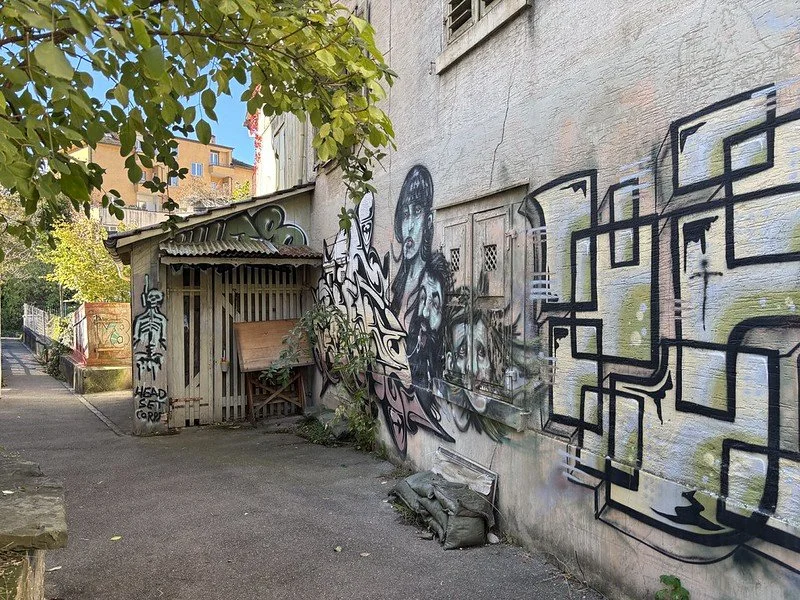
Colorful street art and graffiti cover the walls of a quiet alleyway, where nature and urban creativity meet in Liestal, Switzerland..
At one point, I stopped at a café, ordered a cappuccino, and sat down with my sketchbook.
One of the unexpected benefits of only being able to use my phone when I was connected to the hotel's Wi-Fi was that it forced me to be more present with what was happening around me.
I've been teaching myself to draw over the past year, so I decided to spend some time practicing. I drew my coffee cup, the flowers on the table, and some of the things around me.
There's something I've noticed after being present for a death. I always feel a little amazed that the world just keeps going.
Someone has died. A life has ended. Something significant has happened. And yet, all around us, people are going about their ordinary days.
Sitting there in the café, I listened to conversations I couldn't understand and watched people coming and going.
I wasn't scrolling on my phone.
I wasn't trying to fill the silence.
I was just there.
And I remember how good that felt.

A quiet moment with a coffee in Switzerland during a death doula's journey accompanying a client for voluntary assisted dying,
Throughout the trip, I had felt surprisingly calm and confident, even when things didn't go according to plan. I trusted myself to figure things out, and I did.
I also came home with a deeper appreciation for the complexity of death. I had witnessed someone experience genuine happiness and gratitude in the moments before dying. I had felt joy and sadness together. And I had seen how much planning, care, and support can go into helping someone have the death they want.
Most importantly, I was reminded that talking about death isn't only about dying.
It's about living. It's about understanding what matters to us, recognizing that our time is limited, and making choices that reflect our values.
Can a Death Doula Help Someone Travel to Switzerland for Assisted Dying?
Yes. A death doula can provide nonmedical, practical, and emotional support to someone exploring Voluntary Assisted Dying in Switzerland.
The exact support depends on the person's needs, the doula's training and scope of practice, and the requirements of the assisted-dying organization.
Support may include:
Helping someone understand and explore available end-of-life options without judgment.
Providing a space to talk openly about death, dying, autonomy, and personal wishes.
Helping organize travel logistics, accommodations, and accessibility needs.
Assisting with communication and preparation for meetings with the appropriate professionals.
Accompanying the person during travel and providing appropriate nonmedical caregiving support.
Supporting loved ones before, during, and after the death.
Helping coordinate practical arrangements and belongings afterward.
Providing emotional support and compassionate presence throughout the experience.
A death doula does not determine eligibility, replace medical or legal professionals, prescribe medication, or make the final decision for the person.
For me, the most important part of this work is being able to support someone without judgment.
That doesn't mean ignoring the complexity of assisted dying or assuming it's the right choice for everyone. It means being willing to listen, explore the available options, and respect each person's individual experience.
Supporting End-of-Life Choices With Compassion
I know Voluntary Assisted Dying is a subject that brings up strong feelings.
People have different religious, ethical, cultural, and personal beliefs about assisted dying, and I respect that. I also believe we need to be able to talk about these subjects openly.
People facing serious illness and declining quality of life deserve accurate information, compassionate care, and opportunities to explore what matters most to them.
That includes conversations about hospice, palliative care, advance care planning, Medical Aid in Dying (MAID), voluntarily stopping eating and drinking (VSED), and assisted dying options outside the United States such as Pegasos in Switzerland.
Not every option is available or appropriate for every person, and not everyone will make the same choices, but I believe people deserve to be heard.
My experience accompanying a client to Switzerland reinforced something I've believed throughout my work as a death doula.
We don't have to make the same choices someone else makes, or even agree with them, to treat that person with compassion and respect.
And sometimes, simply being willing to accompany someone through an experience that others find difficult to talk about can make an enormous difference.
Death Doula Support for Voluntary Assisted Dying in Switzerland
I'm Jill McClennen, a certified death doula, funeral celebrant, and founder of End of Life Clarity.
I provide compassionate, nonjudgmental support to individuals and families navigating serious illness, end-of-life planning, dying, and grief. I work in person throughout Southern New Jersey and the Greater Philadelphia area, with virtual support available throughout the United States and beyond.
My experience includes accompanying a client from the United States to Switzerland for Voluntary Assisted Dying (VAD) through Pegasos, supporting individuals navigating New Jersey's Medical Aid in Dying (MAID) process, and helping people explore other end-of-life options, including Voluntarily Stopping Eating and Drinking (VSED).
Whether you're actively planning for Voluntary Assisted Dying in Switzerland, considering Medical Aid in Dying, or simply trying to understand your options, I can provide information, practical planning assistance, emotional support, and a compassionate space to talk openly about your wishes and concerns.
You don't need to have made any decisions before reaching out. We can start with a conversation about what you're considering, what matters most to you, and what kind of support might be helpful.
You don't have to have all the answers before starting the conversation.
Learn more about my services and contact me through my website End of Life Clarity, or by email at jill@endoflifeclarity.com.
This article describes one personal experience and is intended for education and reflection. It is not medical or legal advice. Eligibility, procedures, and requirements for assisted dying vary by location and organization and should be confirmed directly with qualified professionals.
Frequently Asked Questions About Voluntary Assisted Dying in Switzerland
What is Voluntary Assisted Dying (VAD) in Switzerland?
Voluntary Assisted Dying refers to a process in which a person chooses to end their life with assistance under specific legal and medical conditions. In Switzerland, the legal term is assisted suicide. The person must make the final act themselves, and assistance cannot be motivated by selfish interests. Organizations such as Pegasos have additional assessment and documentation requirements.
Can Americans travel to Switzerland for assisted dying?
Yes. Some Swiss assisted dying organizations, including Pegasos, work with people traveling from the United States. However, not everyone who applies will be accepted. Each organization has its own requirements, and individuals must complete the necessary evaluations and documentation before receiving approval.
Do you have to be terminally ill to qualify for assisted dying in Switzerland?
Unlike Medical Aid in Dying laws in many U.S. states, Swiss law does not establish a universal requirement that someone have a terminal diagnosis or a prognosis of six months or less. However, organizations have their own medical and eligibility criteria. Each person's circumstances must be evaluated individually.
What is the difference between Medical Aid in Dying (MAID) in the United States and assisted dying in Switzerland?
In U.S. states where Medical Aid in Dying is legal, eligibility generally requires a terminal illness with a prognosis of six months or less, along with other legal requirements.
Switzerland has a different legal framework. A terminal diagnosis is not universally required by law, although medical assessments and organizational requirements still apply. In both settings, the person must voluntarily choose the process and perform the final act themselves.
What is the Pegasos facility in Switzerland like?
I can only describe the location I personally visited. The building was in an area that felt more commercial than residential, but the interior was warm and welcoming.
There was a large room with natural light, comfortable furniture, beautiful plants, and refreshments. The staff were kind, patient, and respectful. There was time for conversation, music, and private moments without feeling rushed.
Can family members or a death doula be present during voluntary assisted dying?
In my experience at Pegasos, my client was able to have people present for support. There was also time for private conversations and goodbyes before the procedure.
The arrangements for visitors and support people should always be confirmed directly with the organization.
What does a death doula do when accompanying someone to Switzerland for assisted dying?
A death doula can provide nonmedical, practical, and emotional support before, during, and after the journey.
My work included helping my client explore end-of-life options, preparing for international travel, coordinating practical arrangements, assisting with everyday activities, providing emotional support, and being present during their death.
A death doula does not determine eligibility, prescribe medication, or make end-of-life decisions for the client.
What happens after someone dies through assisted dying in Switzerland?
In my experience, the appropriate authorities were notified following my client's death. Police and a medical examiner came to the facility, and I completed paperwork as a witness.
Once the official procedures were finished, Pegasos arranged transportation back to our hotel. The process may vary depending on the organization and circumstances.
What are some of the biggest challenges of traveling to Switzerland for assisted dying?
International travel can be especially difficult for someone experiencing serious illness, limited mobility, or declining physical abilities.
Planning may involve flights, wheelchair assistance, transportation, accommodations, medications, dietary needs, and documentation.
One of the most important lessons from my experience was the value of preparing thoroughly while remaining flexible. Even small details can make a significant difference in someone's comfort and safety.
Can a death doula help me explore voluntary assisted dying even if I haven't made a decision?
Yes. You don't need to have made a decision before reaching out.
As a death doula, I can provide a compassionate, nonjudgmental space to discuss your concerns, explore available end-of-life options, identify questions for medical and legal professionals, and consider what matters most to you.
My role is not to encourage or discourage a particular choice. It is to provide information, emotional support, and practical guidance while respecting your autonomy.
Does End of Life Clarity provide support for voluntary assisted dying in Switzerland?
Yes. Through End of Life Clarity, I offer education, planning assistance, and nonmedical support for individuals exploring Voluntary Assisted Dying in Switzerland.
My experience includes accompanying a client from the United States to Pegasos and supporting them throughout the journey.
I also work with individuals exploring Medical Aid in Dying (MAID), Voluntarily Stopping Eating and Drinking (VSED), and other end-of-life options.
I provide in-person services in Southern New Jersey and Greater Philadelphia, along with virtual support for people in other locations.
If you're considering your options or wondering what support might be helpful, you're welcome to contact me for a conversation.
